Nu-Isoleren Logo
ROOF INSULATION

Professional roof insulation

An insufficiently insulated roof can be a major source of heat loss. Correctly insulating the roof slope or loft floor improves thermal efficiency and comfort.

Nu-Isoleren mainly works with URSA glass wool and IKO PIR insulation boards. For certain loft floors we also use EPS beads.

For roof insulation we always assess the complete roof build-up. The insulation material is only one part of the solution: available space, roof condition, airtightness and vapour control all affect long-term performance.

Professional roof insulation

Why insulate your roof?

A poorly insulated roof can account for significant heat loss. A good insulation layer helps maintain a more stable indoor temperature.

An insulated roof reduces heat loss through the upper part of the building and helps keep rooms below the roof more comfortable. In renovation projects, the first decision is often whether to insulate the roof slope or the loft floor, depending on how the loft is used and how the roof is built.
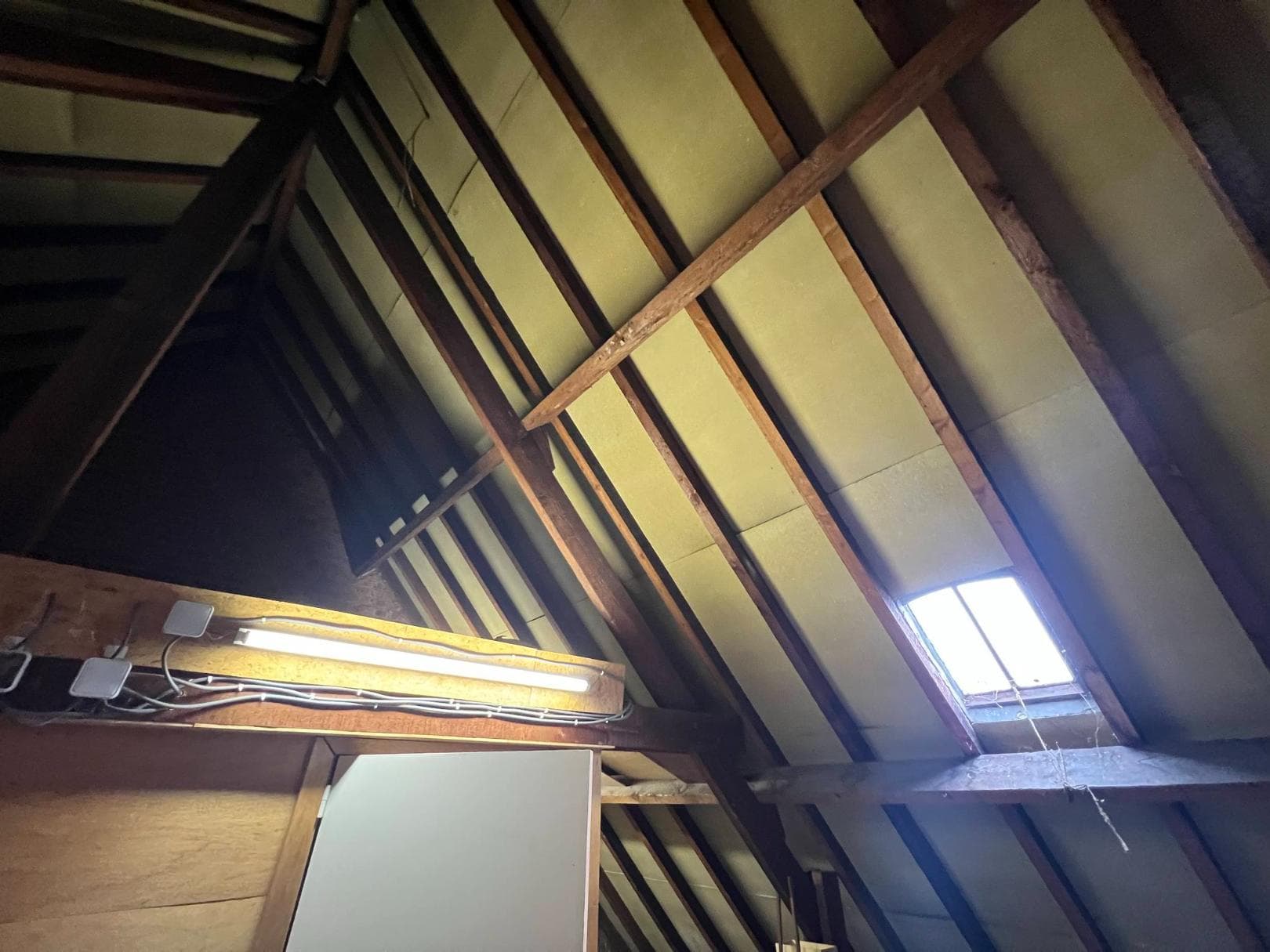
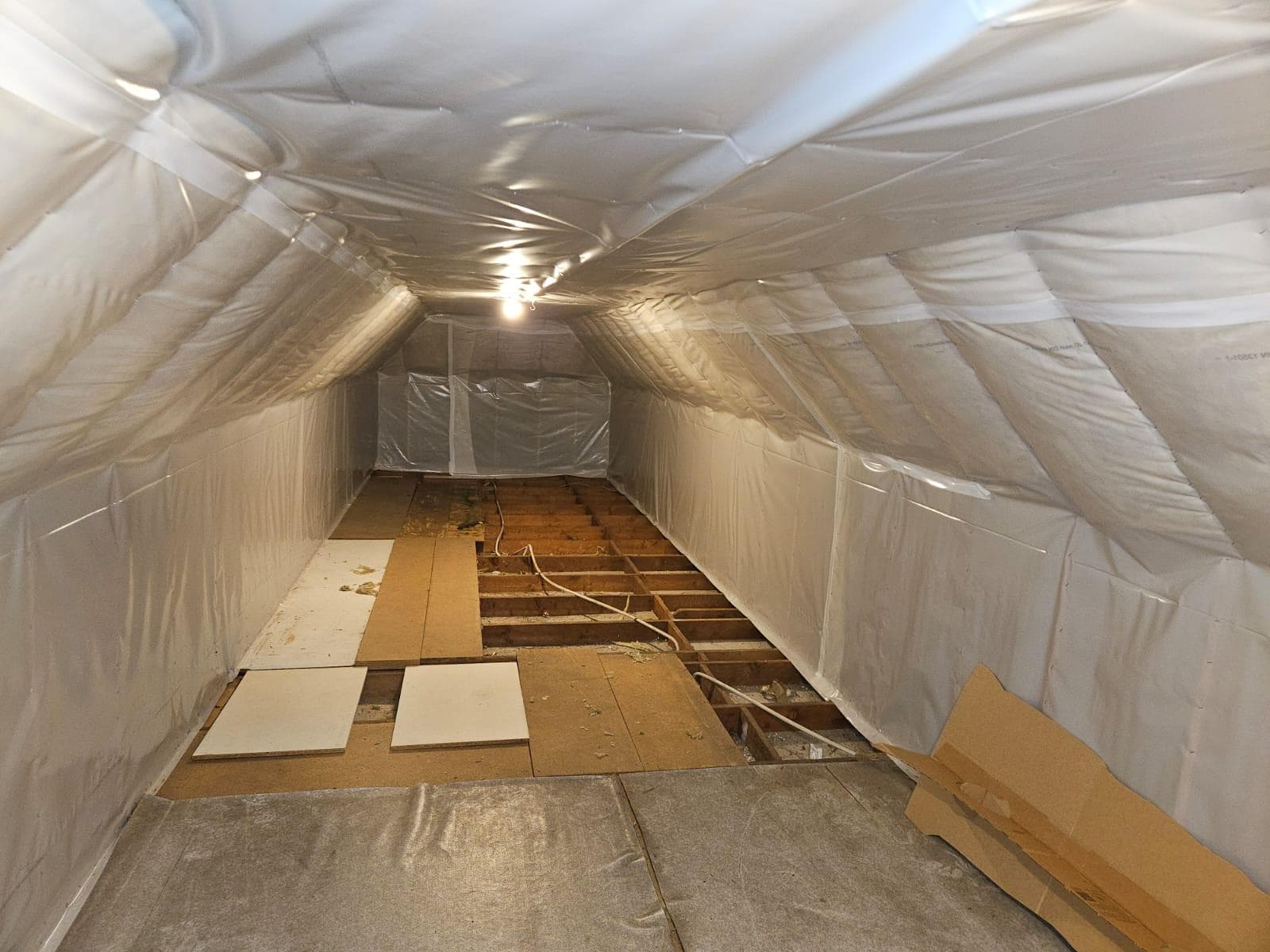
Insulate the roof slope or loft floor?

If the loft is heated or used as living space, insulating the roof slope is often appropriate. For an unheated loft, the floor may be the better location for the thermal envelope.

An insulated roof reduces heat loss through the upper part of the building and helps keep rooms below the roof more comfortable. In renovation projects, the first decision is often whether to insulate the roof slope or the loft floor, depending on how the loft is used and how the roof is built.

What is the best roof insulation for your home?

There is no single best insulation material for every roof. The right choice depends on space, structure, thermal target and finishing.

Nu-Isoleren mainly uses URSA glass wool and IKO PIR, plus EPS beads for certain loft floors.

Nu-Isoleren uses several materials because there is no single best option for every roof. We use URSA glass wool where a flexible material is appropriate, IKO PIR where strong thermal performance is needed with limited thickness, and EPS beads for certain loft floor applications.

Roof insulation with URSA glass wool

Glass wool is flexible and fits well between rafters and framing. Nu-Isoleren uses URSA glass wool and focuses on continuous, gap-free installation.

URSA glass wool is flexible and can be fitted closely between timber rafters or framing. It combines thermal insulation with useful acoustic absorption. Read more on our glass wool insulation page.

Roof insulation with IKO PIR boards

PIR is a rigid board with strong thermal performance at relatively limited thickness. Nu-Isoleren uses IKO PIR suited to the specific roof build-up.

IKO PIR boards are rigid, dimensionally stable insulation boards with strong thermal performance per centimetre. They are particularly useful where build-up depth is limited. More information is available on our PIR insulation page.

Insulating a loft floor with EPS

If the loft remains unheated, insulating the floor can be more logical than insulating the roof slopes. For certain floor constructions we use EPS beads.

If the loft is not used as heated living space, insulating at floor level can be more efficient than bringing the entire roof space into the heated envelope. Nu-Isoleren uses EPS beads for certain loft floor constructions. See our EPS insulation page.

How thick should roof insulation be?

Required thickness depends on material and desired performance. Glass wool and PIR do not provide the same thermal value at the same thickness.

We therefore determine thickness as part of the complete roof build-up.

Before installation we assess the structure and determine where the insulation, airtight layer and any vapour control layer should be positioned. The material is then fitted carefully and all junctions are sealed as part of the complete roof build-up.

Airtightness, vapour control and moisture

Effective roof insulation also requires correct junctions and, depending on the roof, appropriate vapour control and airtightness. Existing moisture problems should be resolved before insulation.

Before installation we assess the structure and determine where the insulation, airtight layer and any vapour control layer should be positioned. The material is then fitted carefully and all junctions are sealed as part of the complete roof build-up.

How is roof insulation installed?

We adapt the system to the existing roof.

Before installation we assess the structure and determine where the insulation, airtight layer and any vapour control layer should be positioned. The material is then fitted carefully and all junctions are sealed as part of the complete roof build-up.

01

Inspect the roof

We assess structure, underlay, available space and moisture.

02

Choose material and thickness

We select URSA glass wool, IKO PIR or an EPS loft-floor solution.

03

Install insulation

The material is installed carefully to minimise gaps.

04

Finish airtight layers

Vapour control and airtight connections are completed where required.

How much does roof insulation cost?

Cost depends on area, material, thickness, accessibility, roof construction and preparation or finishing work.

Roof insulation cost depends on area, material and thickness, accessibility, roof shape and internal finishing. A loft floor also has a different cost structure from a complete roof slope. A free quotation allows us to define the right build-up and cost for the property.

Grants for roof and loft insulation

Depending on the region and circumstances, grants may be available. See our grants section.

Grants may be available for roof or loft floor insulation, but conditions and amounts change over time. Our central grants page contains the regional information.

Frequently asked questions

Answers about materials, thickness, loft floors and pricing.

Should I choose glass wool or PIR for my roof insulation?

This depends on the available space and existing roof construction. Nu-Isoleren works with materials including URSA glass wool and IKO PIR insulation. PIR can be useful where high insulation performance is needed within limited thickness, while glass wool can be a practical solution for other roof structures.

Should I insulate my roof or the attic floor?

If the attic is heated or will become living space, insulating the roof itself is generally the logical choice. If the attic remains unheated and is rarely used, insulating the attic floor can be an attractive alternative. Nu-Isoleren assesses which solution best matches how the property is used.

Can Nu-Isoleren insulate an existing roof from the inside?

Yes. Many existing pitched roofs can be insulated from the inside without replacing the entire roof covering. Nu-Isoleren first examines the existing roof structure and then selects a suitable insulation build-up and material.

Ready to improve your home?

Request a non-binding quote and discover what we can do for your home.