



What insulation does your home need?
Answer a few short questions about your property, roof, external walls, façade and any moisture problems. You will then receive a personalised overview of the Nu-Isoleren solutions that may be relevant for your home.
The home check provides an initial indication and does not replace a technical inspection on site.
Discover which solutions may suit your home
Answer four short steps about your property, roof, external walls and any moisture problems. We will then show which Nu-Isoleren solutions may be relevant for your home.
Step 1 of 4
25%
Tell us about your property
The construction year and property type provide an initial indication of the possible construction and insulation of your home.
Which region is your property located in?
What type of property do you have?
This home check provides an initial indication based on your answers and does not replace an on-site technical inspection.
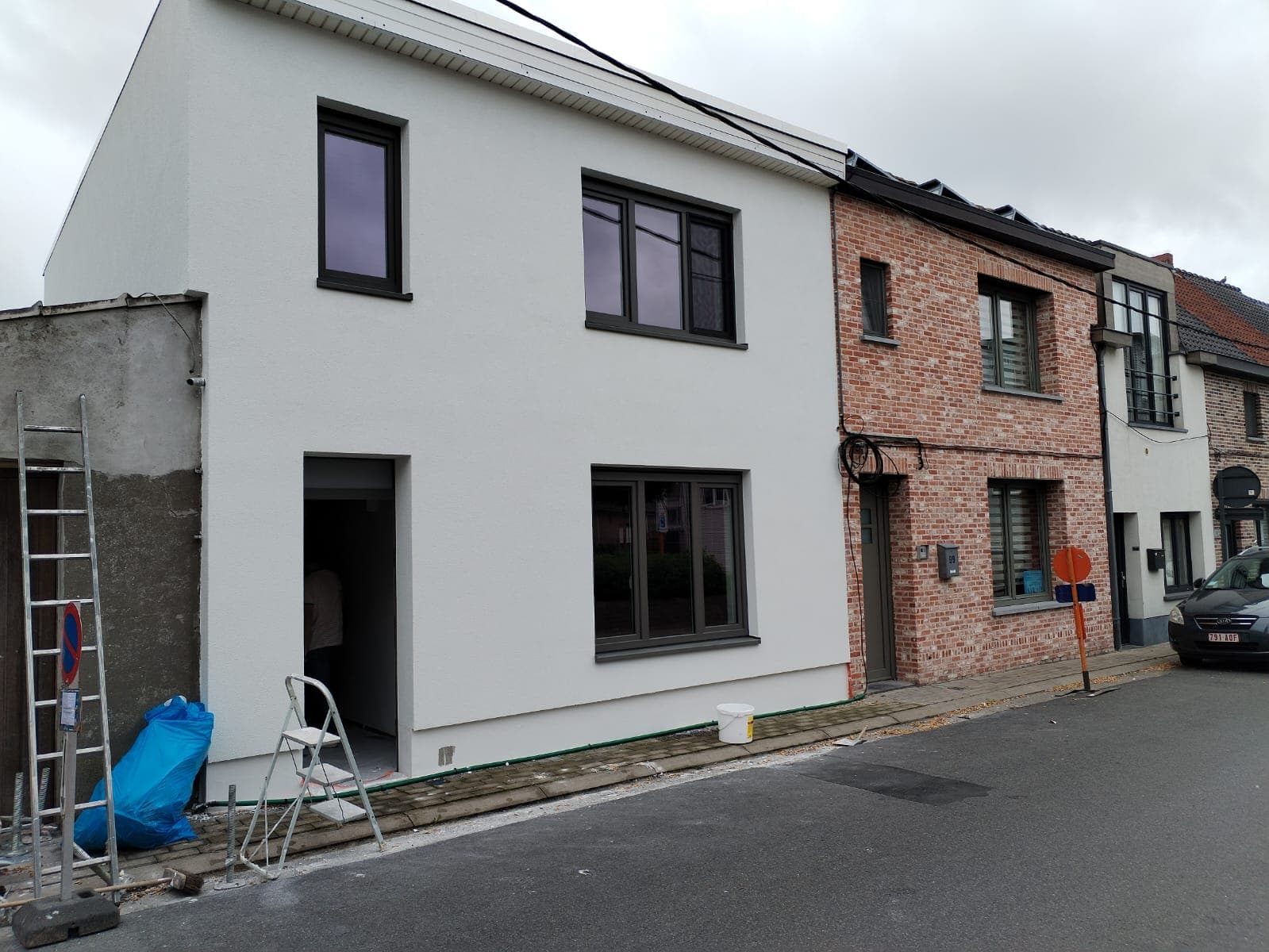
From home check to the right solution
Every property is different. The home check helps identify possible areas of concern and links them to solutions that Nu-Isoleren can carry out.
Based on your answers, you receive an initial indication of possible insulation, façade or moisture issues.
The home check directly links these points of attention to suitable Nu-Isoleren services.
If required, the technical situation can be assessed on site before determining the final solution.
An online home check cannot assess every detail of a property. The condition of the cavity walls, roof, façade and any moisture issues can be evaluated more accurately during an on-site inspection.
Frequently asked questions about insulating your home
Find answers about the home check, suitable insulation measures, cavity walls, moisture problems and Nu-Isoleren solutions.
What type of insulation does my home need?
The most suitable insulation depends on the age, construction and current condition of your property. In many older homes, the roof and external walls are important areas to check. If the property has a suitable uninsulated cavity wall, cavity wall insulation may be an effective option. If there is no suitable cavity, external wall insulation with render may be more appropriate. The free Nu-Isoleren home check provides an initial indication of which solutions may suit your property.
How wide does a cavity need to be for insulation?
For an existing cavity wall to be retrofitted with insulation, the cavity should be at least 5 cm wide according to Belgian technical guidance. Width alone is not enough: the cavity must also be sufficiently clear of mortar deposits, rubble and other obstructions so that the insulation can spread evenly. The external wall, mortar joints, wall ties, existing insulation and possible moisture problems should also be inspected before the cavity is filled.
Can existing cavity wall insulation be topped up?
Yes, existing cavity wall insulation can sometimes be topped up, but the existing material and the remaining free space in the cavity must first be inspected. If the old insulation is still in good condition but leaves gaps or insufficiently filled areas, adding insulation may be possible. If it has collapsed, become damp, contaminated, unevenly distributed or is incompatible with the new system, some or all of the old insulation may need to be removed first.
Can an old roof still be insulated?
Yes. An old roof does not automatically need to be completely replaced before it can be insulated. If the roof structure is sound, there are no active leaks and the covering is still in good condition, a pitched roof can often be upgraded with insulation from the inside. The timber structure, signs of moisture or mould, the roof underlay and the available space between rafters should first be inspected.
Can a roof without an underlay be insulated?
A roof without an underlay cannot simply be insulated in the same way as a roof with a correctly installed underlay. The underlay provides a secondary layer of protection against rain, snow and moisture entering beneath the roof covering. If it is missing, the entire roof build-up and the condition of the covering must first be assessed. Simply packing insulation directly against the underside of the tiles without an appropriate moisture-management solution is not a standard approach.
When should an exterior wall be waterproofed or impregnated?
Facade impregnation can be useful when a porous exterior wall absorbs significant amounts of wind-driven rain while the masonry itself remains technically sound.
A wall that stays wet for a long time after rainfall or visibly absorbs water may benefit from a penetrating water-repellent treatment.
Nu-Isoleren.be first checks whether the moisture is actually caused by rainwater rather than damaged joints, cracks, leaks or rising damp. The treatment should always match the actual cause of the moisture problem.
Does facade waterproofing help with damp walls?
Facade waterproofing can help when dampness is caused by wind-driven rain being absorbed through a suitable porous exterior wall.
It does not treat rising damp, where ground moisture moves upward through the masonry by capillary action.
Condensation and leaks also require different solutions. Nu-Isoleren.be therefore identifies the likely source of the moisture before recommending facade impregnation or another treatment.
Can a brick facade be waterproofed or impregnated?
Yes. Many porous brick facades can be treated with a penetrating water repellent, provided that the bricks and mortar joints are technically suitable and sufficiently absorbent.
The exterior wall should also be clean, stable and sufficiently dry. Cracks and damaged mortar joints should be repaired beforehand.
Because different bricks and finishes absorb water differently, Nu-Isoleren.be assesses the surface before carrying out brick facade impregnation.
Where should I start when insulating my home?
For a poorly insulated property, the roof is often a logical place to start because roof insulation can significantly reduce heat loss. The external walls can then be assessed for cavity wall insulation or external wall insulation. The ideal order depends on the property itself. Nu-Isoleren uses the home check to assess the roof, walls, façade and possible moisture issues before suggesting the most relevant solutions.
How do I know whether my home has cavity walls that can be insulated?
In Flanders, cavity walls became increasingly common from the 1950s onwards and continued to be widely used throughout the following decades, well into the 1990s and 2000s. However, the year of construction alone does not provide certainty. Wall thickness, brickwork and certain openings can provide useful indications. To determine whether the cavity is suitable for insulation, Nu-Isoleren carries out an on-site inspection, checking factors such as cavity width, debris, moisture and the condition of the exterior wall.
Is every facade suitable for waterproofing?
No. Penetrating water-repellent treatments are mainly suitable for porous mineral exterior walls, including many brick facades and suitable masonry.
Walls with major cracks, damaged mortar joints, active leaks, frost damage or incompatible existing coatings should not simply be waterproofed without an inspection.
Nu-Isoleren.be therefore checks the wall material, mortar joints, condition and absorbency before deciding whether facade impregnation is technically suitable.
Should moisture problems be treated before insulating a property?
Moisture problems should first be properly diagnosed. Damp patches at the bottom of internal walls may indicate rising damp, while moisture on an external façade can have a different cause. Installing insulation without understanding the source of the moisture is therefore not recommended. Nu-Isoleren also provides rising damp treatment, water-repellent façade treatment and façade services when these are required before or alongside insulation work.
Can Nu-Isoleren inspect my property before I decide which insulation I need?
Yes. The Nu-Isoleren online home check is intended as an initial assessment. An on-site inspection can provide a more accurate picture of the technical condition of the property. This is especially important for cavity walls, existing cavity insulation, damaged façades and moisture problems. Nu-Isoleren can then determine which work is technically suitable for the property.
Can I combine roof insulation, cavity wall insulation and façade work?
Yes. Several parts of a property can be improved as part of the same renovation. A home may need both roof insulation and cavity wall insulation, for example. If the cavity is unsuitable, external wall insulation with render may be a better option. Façade cleaning, hydrofuge treatment or moisture treatment can also be combined where appropriate. Nu-Isoleren assesses which combination of services best matches the condition of the property.
Ready to improve your home?
Request a non-binding quote and discover what we can do for your home.