


Current situation
We first estimate the current heat loss based on factors including the construction year, existing insulation and the surface area of the building element.
Calculate how much energy you could potentially save by improving your home's insulation. Enter a few details about your property and its current insulation to receive an indicative estimate of your annual energy savings.
The calculation is indicative. Actual savings depend on your property, energy consumption and heating behaviour.
Answer a few questions about your home, its current insulation and heating situation. You will then receive an indicative estimate of how much heating energy insulation could save.
Step 1 of 4
25%
A few basic details help us estimate the size of the property and its heating demand more accurately.
This calculator provides an indicative estimate. Actual savings depend on factors such as the property, quality of installation, indoor temperature and heating behaviour.
A home loses heat through areas such as the roof and external walls. Improving a poorly insulated building element can reduce that heat loss. Our calculator estimates the potential effect of the selected insulation measure for your situation.
We first estimate the current heat loss based on factors including the construction year, existing insulation and the surface area of the building element.
We then estimate how much the heat loss could decrease once the selected building element is better insulated.
The difference is converted into an indicative energy saving in kWh, a percentage and, when provided, an estimated financial saving.
The calculation takes several factors into account that can affect the potential impact of insulation.
Property type
Construction year
Current insulation
Area to be insulated
Heating source
Annual energy consumption
The calculation remains an indicative estimate. Actual energy savings may vary depending on factors such as the property's construction, quality of installation, weather conditions, indoor temperature and heating behaviour.
Not every insulation measure has the same effect in every home. Potential savings mainly depend on how much heat the building element currently loses and how well it is already insulated.
Cavity wall insulation fills the space between the inner and outer wall with insulating material. This can reduce heat loss through external walls without having to renovate the entire façade.
Especially useful when
The property has a suitable cavity wall that is empty or insufficiently insulated.
Heat rises, so a poorly insulated roof can be an important source of heat loss. Roof or attic floor insulation helps keep more heat inside the heated part of the property.
Especially useful when
The roof is uninsulated, poorly insulated or contains older insulation.
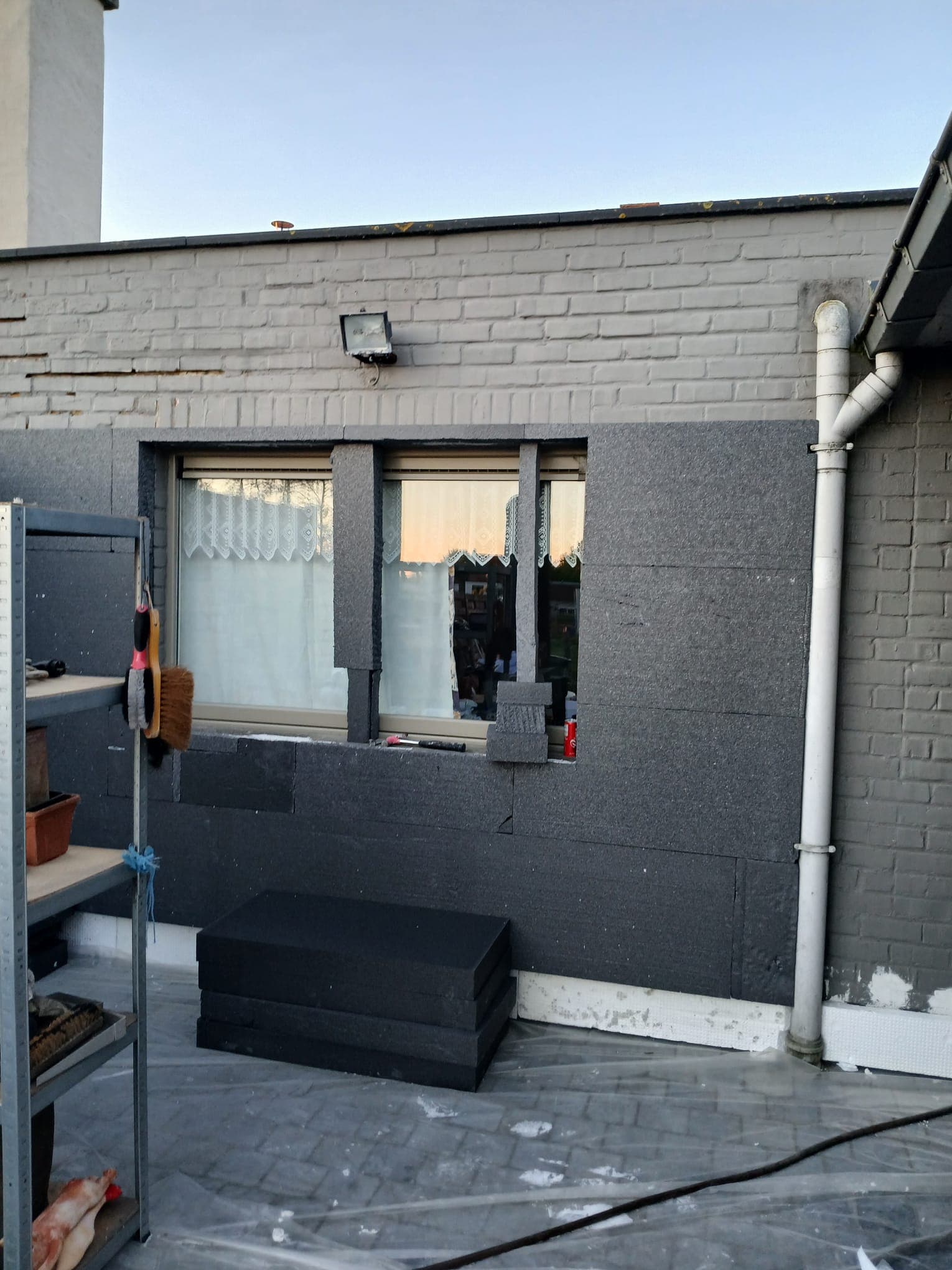
External wall insulation adds an insulating layer to the outside of the property. It can significantly reduce heat loss through external walls while also renewing the appearance of the façade.
Especially useful when
Cavity wall insulation is not possible or insufficient, or when the façade is already due for renovation.
Explore our insulation and façade solutions to discover which options could be suitable for your property.
The calculator provides an estimate. Two homes with the same floor area can still achieve different savings in practice because several technical and behavioural factors affect energy use.
The calculator compares an estimated current situation with an improved situation after insulation. An exact assessment requires information such as the actual construction, insulation thickness and condition of the property.
The poorer the current insulation of a roof or external wall, the greater the potential reduction in heat loss will generally be.
The construction of the walls, roof and other building elements affects how much heat the property loses and how much improvement additional insulation can provide.
The size of the roof or external walls being insulated directly affects the amount of heat loss that can potentially be reduced.
The type and efficiency of the heating system affect how much purchased energy is required to provide the same amount of heat inside the property.
Higher indoor temperatures and colder outdoor conditions increase the temperature difference between inside and outside and therefore increase heat loss.
How long you heat the property, which rooms are heated and how the thermostat is used all influence the final energy consumption.
Find answers about our savings calculator, energy savings from insulation and the factors that affect your actual result.
The amount of energy you can save mainly depends on how well your home is currently insulated, the area being insulated and your heating system. Savings can be substantial in poorly insulated homes. In some situations, insulating a poorly insulated roof can reduce heating costs by around 30%. The Nu-Isoleren energy savings calculator provides a more personalised estimate based on your property, energy use and selected insulation measure.
Roof insulation is often one of the most effective measures when a roof has little or no insulation. Around 30% of a home's heat can be lost through an inadequately insulated roof. Actual savings depend on the existing insulation, roof area, heating system and current energy consumption, which is why Nu-Isoleren calculates an estimate based on your individual situation rather than promising one fixed percentage.
Cavity wall insulation can significantly reduce heat loss through external walls when the cavity is empty or insufficiently insulated. The actual saving depends on factors such as wall area, existing insulation, cavity width and heating system. The Flemish government describes cavity wall insulation as a cost-effective way to make an existing home more energy efficient.
There is no single insulation measure that produces the greatest saving in every property. Roof insulation may be the priority in a home with an uninsulated roof, while cavity wall or external wall insulation may have more impact when the walls are the weakest part of the building envelope. External wall insulation can also accommodate a thicker layer of insulation than is normally possible inside an existing cavity.
The Nu-Isoleren calculator provides an indicative estimate rather than a guaranteed saving. It considers factors including property type, construction year, existing insulation, insulation area, heating source and annual energy consumption. Actual results can also be affected by the exact construction, insulation thickness, airtightness, indoor temperature, weather and heating behaviour.
Yes. Roof, cavity wall and external wall insulation can improve a property's energy performance by reducing heat loss through the building envelope. This may have a positive effect on an EPC or PEB rating. The exact change depends on the complete property and the official regional calculation method, so the Nu-Isoleren calculator does not replace an official EPC or PEB certificate.
Yes. Improving several parts of the building envelope can reduce heating demand more than addressing only one area. Roof insulation can, for example, be combined with cavity wall or external wall insulation. The Flemish government notes that heating a poorly insulated home can cost more than twice as much as heating a well-insulated one.
Request a non-binding quote and discover what we can do for your home.