Nu-Isoleren Logo
EPC CALCULATOR

Estimate the EPC rating of your home

Answer a few questions about your home, insulation, windows and heating system to get an initial estimate of its energy performance.

This calculation is indicative and does not replace an official EPC certificate.

Estimate the energy performance of your home

Answer a few questions about your home and its systems to receive an indicative estimate of its energy performance.

Step 1 of 813%
YOUR HOME

First, tell us a little about your home

These basic details allow us to select the appropriate regional methodology and calculation assumptions.

Where is your home located?

What type of home do you have?

Enter the original construction year of the property.

m²

Enter your best estimate of the heated floor area.

This calculator provides an indicative estimate and does not replace an official EPC or PEB certificate.

ENERGY PERFORMANCE

What does your EPC or PEB score mean?

The energy score indicates how efficiently a home performs under standardised conditions. It is expressed in kilowatt-hours of primary energy per square metre per year, or kWh/(m² year).

The lower the energy score, the more energy efficient the property. The calculation considers factors such as roof, wall and floor insulation, windows, heating, domestic hot water, ventilation and renewable energy.

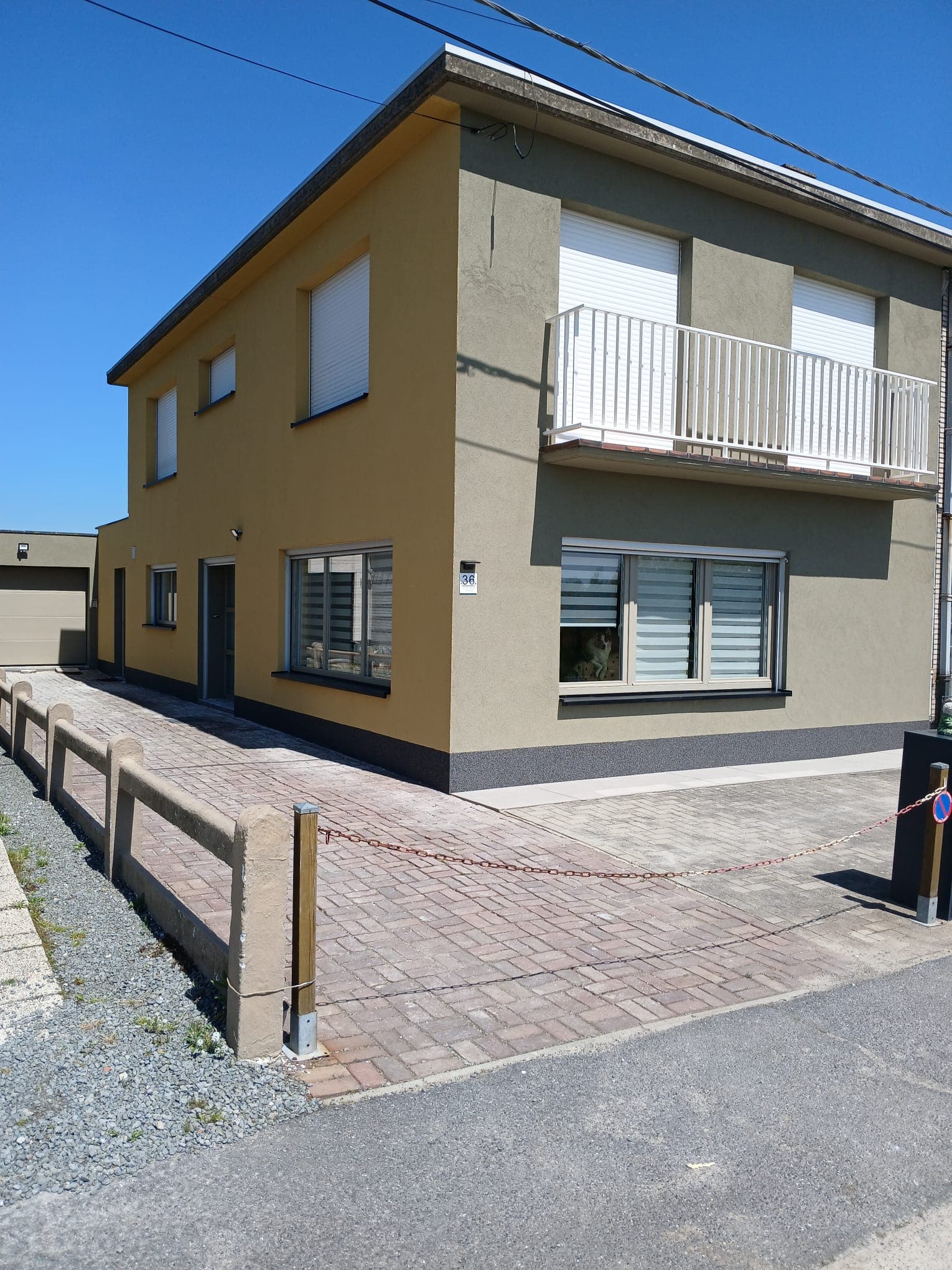
Woning waarvan dak, gevel, ramen en isolatie invloed hebben op de EPC-waarde

ENERGY SCORE

A lower score means better energy performance

The score represents the calculated annual energy performance per square metre of the property. A home with a lower score generally requires less primary energy under the same standardised conditions.

ENERGY LABEL

The label makes the energy score easier to understand

The numerical energy score is converted into an energy label. Flanders, Brussels and Wallonia each use their own label scale and threshold values.

THEORETICAL CALCULATION

Your EPC or PEB score is not the same as your energy bill

Energy performance certificates use standardised assumptions so that homes can be compared fairly. Your actual energy consumption may be higher or lower depending on occupancy, heating behaviour and personal habits.

EPC & PEB LABELS

Which energy score corresponds to which label?

Energy label thresholds differ between Belgium's regions. See how EPC and PEB scores are classified in Flanders, Brussels and Wallonia.

EPC labels in Flanders

In Flanders, residential EPC labels range from A+ to F. A lower energy score indicates a more energy-efficient home.

A+
Energy label
≤ 0 kWh/(m² jaar)
A
Energy label
1 – 100 kWh/(m² jaar)
B
Energy label
101 – 200 kWh/(m² jaar)
C
Energy label
201 – 300 kWh/(m² jaar)
D
Energy label
301 – 400 kWh/(m² jaar)
E
Energy label
401 – 500 kWh/(m² jaar)
F
Energy label
≥ 501 kWh/(m² jaar)

The displayed thresholds follow the Flemish residential EPC label scale. Only an official EPC can determine the final label of a property.

IMPROVE YOUR EPC

How can you improve your home's energy rating?

Improving energy performance usually starts by reducing heat loss. Roof and external wall insulation can therefore play an important role in improving a home's calculated energy performance.

01

Cavity wall insulation

If your home has a suitable uninsulated cavity wall, cavity wall insulation can reduce heat loss through the external walls. Existing wall insulation is taken into account when assessing energy performance.

View cavity wall insulation
02

Roof insulation

An inadequately insulated roof can lead to significant heat loss. Depending on the property, either the roof itself or the attic floor can be insulated to improve the thermal envelope.

View roof insulation
03

External insulation with render

When cavity wall insulation is not possible or sufficient, external wall insulation can provide an alternative. The insulation layer is combined with a new rendered façade finish.

View external insulation with render

Other parts of your home also affect the energy score

In addition to insulation, energy performance calculations also consider windows and doors, heating, domestic hot water, ventilation and renewable energy.

Windows & glazing

High-performance or triple glazing can reduce heat loss through windows, particularly where single glazing or older double glazing is still present.

Heating

The efficiency and type of heating system influence the calculated energy use of the property.

Solar energy

Solar panels and solar thermal systems can contribute to energy performance by supplying part of the home's energy from renewable sources.

The measure with the greatest impact varies from one property to another. An official EPC or PEB assessment and its recommendations provide more detailed information for the specific property.

INDICATIVE ESTIMATE

Why is this EPC or PEB calculation an estimate?

Our calculator provides an initial estimate of a home's energy performance based on the information you enter. An official EPC or PEB assessment uses more detailed technical data and follows the certification methodology of the relevant region.

The information you provide

The calculation considers factors such as property type, construction year, floor area, insulation, glazing, heating, ventilation and renewable energy.

Missing technical information is estimated

When certain technical details are unknown, the calculator has to use assumptions. The actual official energy score may therefore differ from the estimate.

An official certificate requires an official assessment

Only an EPC or PEB certificate produced according to the relevant regional certification methodology can determine the official energy score and label.

Important: use this result as an initial indication of your home's energy performance, not as an official EPC or PEB certificate.

FREQUENTLY ASKED QUESTIONS

Frequently asked questions about EPC and PEB

Find answers about energy scores, energy labels, our calculator and improving your home's energy performance.

What is a good EPC or PEB rating?

A lower energy score indicates better energy performance. In Flanders, an EPC score between 1 and 100 kWh/(m² year) corresponds to label A, while a score of 0 or below corresponds to A+. Brussels and Wallonia use their own PEB scales and thresholds, so scores should always be interpreted according to the region where the property is located.

How is an EPC or PEB score calculated?

An energy performance score is calculated using the energy-related characteristics of the property. These include the size of the home, roof, wall and floor insulation, windows and doors, heating, domestic hot water, cooling, ventilation and solar energy systems. Standardised assumptions are used so that the energy performance of different homes can be compared.

What does kWh/(m² year) mean on an EPC or PEB certificate?

kWh/(m² year) expresses the calculated annual primary energy performance per square metre of floor area. A lower figure generally indicates a more energy-efficient property. It is a theoretical energy performance figure and is not the same as the actual consumption shown on your energy bills.

Is the Nu-Isoleren EPC calculator official?

No. The Nu-Isoleren calculator provides an indicative estimate based on the property information you enter. The result is not an official EPC or PEB certificate and cannot replace an official certificate required for purposes such as selling or renting a property. Official certificates must be prepared according to the applicable regional certification rules by an authorised professional.

Why can the estimated EPC score differ from my official certificate?

An official EPC or PEB assessment uses a detailed regional calculation methodology and more technical information about the building. An online calculator does not always have access to all of these details and therefore has to make assumptions for some inputs. The estimated result can consequently be higher or lower than the score on an official certificate.

Can insulation improve my EPC or PEB score?

Yes. Roof, wall and floor insulation are taken into account when assessing the energy performance of a home. Improving insulation can reduce heat loss and contribute to a better energy score. The exact effect depends on the existing building, insulation levels, technical systems and other characteristics of the property.

What is the difference between EPC and PEB?

EPC is the term commonly used in Flanders for the energy performance certificate. Brussels and Wallonia mainly use PEB, short for Performance Énergétique des Bâtiments. They serve a similar purpose, but each Belgian region uses its own calculation methodology, energy label scale and thresholds.

Is my EPC or PEB score the same as my actual energy consumption?

No. EPC and PEB scores are theoretical calculations based on standardised conditions so that properties can be compared consistently. Actual consumption also depends on factors such as occupancy, indoor temperature, heating habits and how much of the property is heated. As a result, actual energy consumption can differ substantially from the calculated score.

Ready to improve your home?

Request a non-binding quote and discover what we can do for your home.