Nu-Isoleren Logo
INSULATION MATERIAL

EPS insulation with beads and insulation boards

EPS is a versatile insulation material available as both insulation beads and rigid boards. Nu-Isoleren uses EPS for cavity wall insulation, certain loft floor applications and external wall insulation behind render.

EPS insulation with beads and insulation boards

EPS stands for expanded polystyrene. It is a lightweight insulation material with a cellular structure that contains a large amount of trapped air. This structure gives EPS its thermal insulating properties.

EPS can be used in several forms. For cavity wall insulation and certain loft floor applications, Nu-Isoleren uses EPS beads from Isomo nv in Kortrijk-Heule. For external wall insulation behind render, we use EPS insulation boards from Hisfa nv in Hulshout.

The appropriate type, thickness and form of EPS depend on the construction, application and required insulation level.

What is EPS insulation?

EPS stands for expanded polystyrene. During production, a lightweight cellular structure is formed that contains a large amount of trapped air.

This air plays an important role in the material’s insulating performance and helps reduce heat transfer through a construction.

EPS is available in several forms. It can be made into small insulation beads or rigid insulation boards.

This allows the same basic material to be used for different applications. Nu-Isoleren uses EPS for cavity walls, loft floors and external wall insulation behind render.

EPS beads from Isomo

EPS beads are small insulation granules that can be used to fill existing spaces.

Nu-Isoleren uses EPS beads from Isomo nv in Kortrijk-Heule.

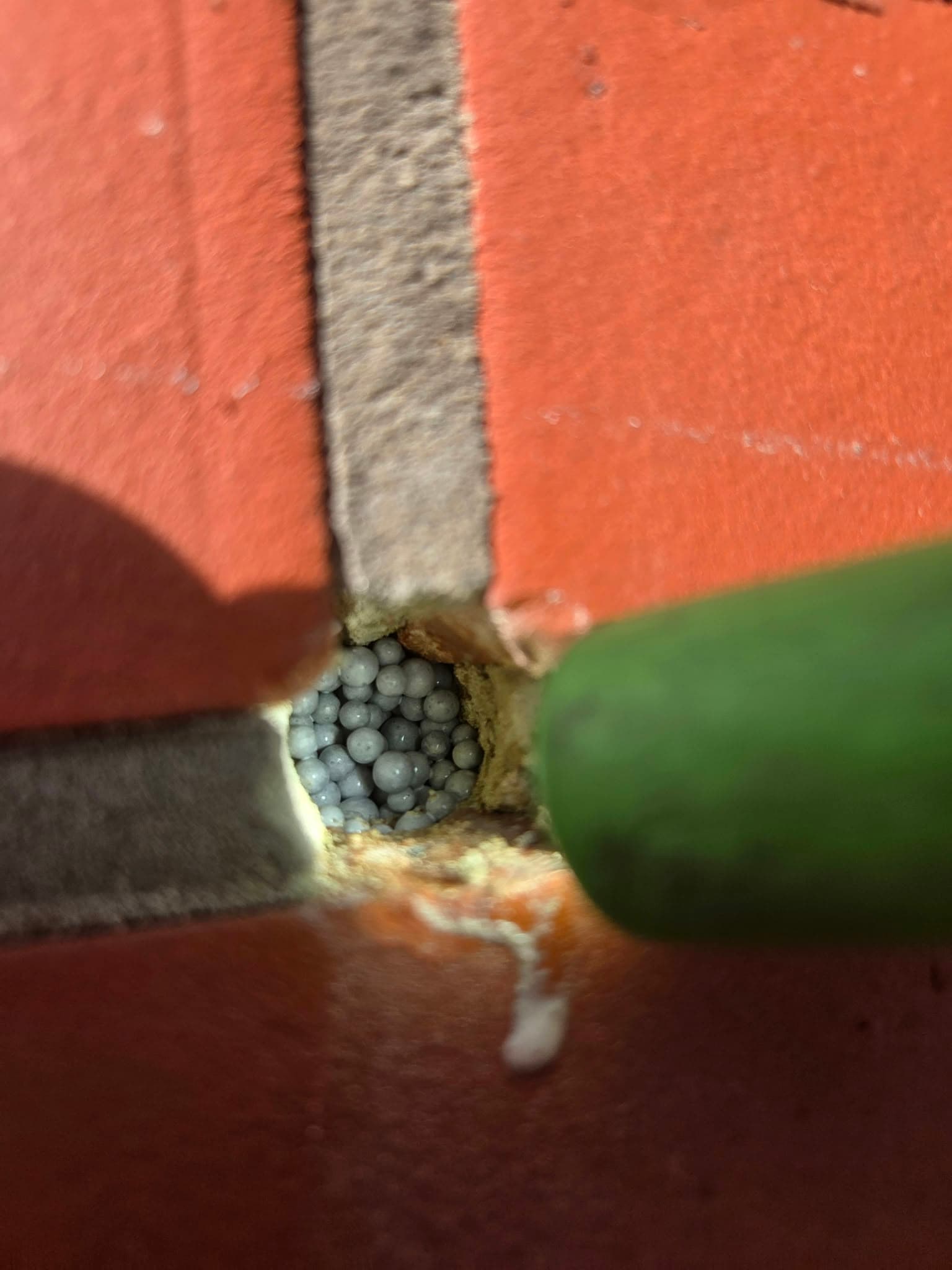
For cavity wall insulation, the beads are injected into the existing cavity through small holes drilled in the exterior wall. They spread through the available space and, together with a bonding agent, form a stable insulation layer.

We also use EPS beads for certain loft floor applications. This can be useful where the loft itself is not used as a heated living space and the thermal envelope is positioned at floor level.

The exact installation method depends on the construction and application.

EPS beads from Isomo - 1

Hisfa EPS boards for external wall insulation

EPS is also manufactured as rigid insulation boards.

For external wall insulation behind render, Nu-Isoleren uses EPS insulation boards from Hisfa nv in Hulshout.

The insulation boards are installed against the outside of the existing wall and together form a continuous insulation layer. The remaining façade system is then built over the insulation and finished with render.

This method can improve the thermal performance of the external walls while simultaneously giving the property a new exterior finish.

The thickness and type of EPS boards are selected according to the existing wall, required insulation performance and complete façade system.

Hisfa EPS boards for external wall insulation - 1

How does EPS insulation work?

The insulating properties of EPS come mainly from the large amount of trapped air contained within its cellular structure.

This air helps reduce heat transfer.

With EPS beads, an existing space is filled with small insulation granules. Nu-Isoleren uses this method for cavity walls and certain loft floor applications.

EPS insulation boards use the same thermal principle but form a rigid insulation layer. For external wall insulation, the boards are fitted to the outside of the wall before the render system is applied.

The final insulation performance depends not only on the material itself, but also on its thickness, installation and the complete construction.

Why do we work with Isomo and Hisfa?

Nu-Isoleren uses different EPS manufacturers depending on the application.

For EPS beads, we work with Isomo nv in Kortrijk-Heule. Isomo has extensive experience in producing and processing expanded polystyrene and offers a system specifically for cavity wall insulation using EPS beads.

For EPS insulation boards, we work with Hisfa nv in Hulshout. Hisfa has been manufacturing EPS insulation boards since 1965 and produces different types for applications including walls, façades, roofs and floors.

This allows us to use an EPS product suited to the way the insulation needs to be installed.

What are the benefits of EPS insulation?

One of the main advantages of EPS is its versatility. It can be used both as loose insulation beads and as rigid insulation boards.

EPS provides good thermal insulation while remaining very lightweight.

The material is dimensionally stable and absorbs relatively little moisture. Depending on the application, EPS can either fill an existing space or create a rigid and continuous insulation layer.

For cavity walls, EPS beads can be injected without major work inside the home.

For external wall insulation, EPS boards can create a continuous insulating layer on the outside of the property.

EPS beads can also provide a practical insulation solution for certain loft floors.

What is grey EPS?

In addition to traditional white EPS, grey EPS is also available.

Graphite is added to grey EPS. This helps reduce thermal radiation within the insulation material and can therefore improve its thermal performance.

Grey EPS can be used in bead form as well as in other EPS products.

The exact type of EPS used depends on the insulation system and the specific product selected.

Final thermal performance depends on several factors, including the material, thickness and complete construction.

How is EPS insulation installed?

The installation method for EPS depends on the application.

For cavity wall insulation, EPS beads are injected into the existing cavity through small holes drilled in the exterior wall. The openings are carefully sealed again after filling.

For certain loft floors, EPS beads can be used to create an insulating layer at floor level.

For external wall insulation behind render, rigid EPS boards are installed against the outside of the wall. The boards are carefully fitted together and form the insulating base for the rest of the façade system.

Before starting the work, we assess the existing construction and determine which EPS solution is appropriate.

How is EPS insulation installed? - 1

EPS, moisture and durability

EPS has a closed-cell structure and absorbs relatively little moisture. This makes it suitable for a range of applications within the building envelope.

However, existing moisture problems should not be ignored. The construction must be in suitable condition before insulation work begins, and issues such as damaged façades or water penetration should first be assessed.

EPS is also dimensionally stable and can retain its function for a long period when correctly installed and protected within the insulation system.

The durability of the complete insulation system depends not only on the EPS itself, but also on the construction, installation and finishing.

Where does Nu-Isoleren use EPS?

Nu-Isoleren uses EPS for several insulation applications.

For existing cavity walls, we use EPS beads from Isomo.

We also use EPS beads for certain loft floor applications where the thermal envelope is positioned at floor level.

For external wall insulation behind render, we use EPS insulation boards from Hisfa. The boards form a continuous insulating layer on the exterior of the building.

The most appropriate solution always depends on the property, existing construction and purpose of the insulation work.

EPS, glass wool or PIR: what is the difference?

EPS, glass wool and PIR are different insulation materials with their own properties and applications.

EPS can be used in both bead and board form. Nu-Isoleren uses it for cavity wall insulation, certain loft floor applications and external wall insulation behind render.

Glass wool is flexible and is mainly used by Nu-Isoleren for roof insulation. It can be installed between timber rafters or roof framing and also provides good acoustic properties.

PIR is generally supplied as rigid insulation boards and is also used for roof insulation. It is particularly useful when strong thermal performance is required with a relatively limited insulation thickness.

The most suitable material depends on the construction, available space and required insulation build-up.

Ready to improve your home?

Request a non-binding quote and discover what we can do for your home.