


Does your home have a cavity wall but you also want to renovate the façade? Or is there no suitable cavity and you are looking for another way to insulate the external walls? Cavity wall insulation and external wall insulation finished with render are two common solutions. Both improve the insulation of a home, but they differ considerably in installation, possibilities and appearance.
Renovation advice
Cavity wall insulation or external render insulation: which is right for your home?
Choosing between cavity wall insulation and external wall insulation with render? Compare the differences, advantages and which solution may suit your home best.
Updated on 19 September 2026
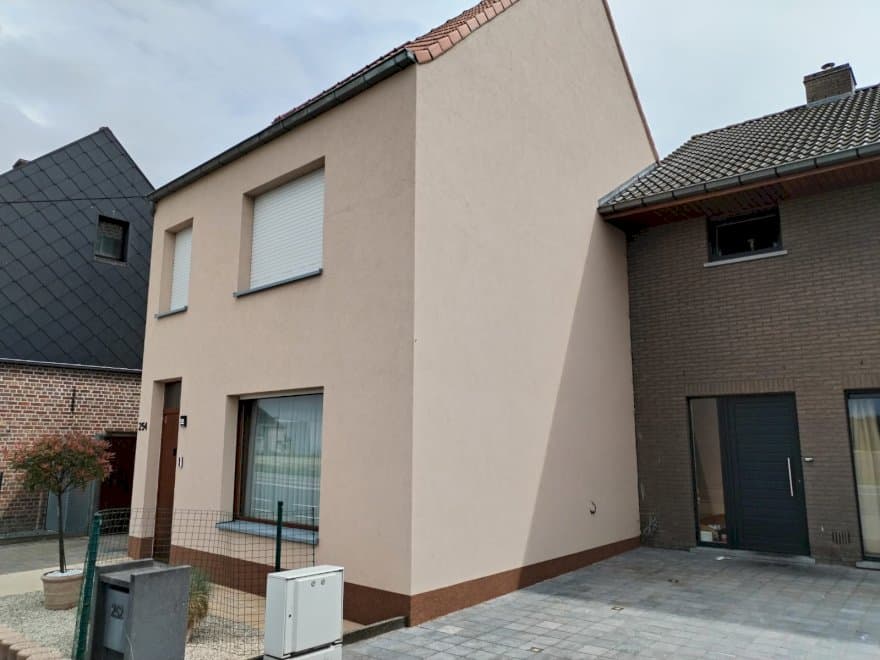
What is the difference between cavity wall insulation and external render insulation?
With cavity wall insulation, the existing space between the inner and outer leaves of the wall is filled with insulation material. At Nu-Isoleren, EPS beads are one of the materials we use. Small holes are drilled into the joints, the insulation is installed and the openings are then closed again.
The appearance of the existing façade therefore remains largely unchanged.
External wall insulation works differently. Insulation boards are fixed to the outside of the existing wall and covered with a reinforced base coat and a rendered finish.
The main difference is that cavity wall insulation uses the existing cavity, while external wall insulation creates a new insulating layer around the outside of the property.
When should you choose cavity wall insulation?
Cavity wall insulation is particularly suitable when your home has an appropriate cavity and you want to retain the existing appearance of the façade.
The cavity needs to be sufficiently wide and clean, and the external wall must be suitable for retrofit insulation. Cracks, moisture problems and exposure to driving rain should also be checked beforehand.
The work can generally be completed relatively quickly with limited visible changes to the façade.
The available insulation thickness is, however, limited by the width of the existing cavity.
When should you choose external wall insulation with render?
External wall insulation with render can be particularly attractive when there is no suitable cavity, when greater insulation performance is desired or when the façade needs renovating anyway.
Insulation boards are installed on the outside of the existing wall, which gives much more freedom when choosing the insulation thickness.
The property also receives a completely new façade finish, allowing its appearance to be transformed.
The existing substrate must be suitable and all components of the façade system need to be properly matched and installed.
Which option deals better with thermal bridges?
Cavity wall insulation fills the existing cavity only. Thermally weaker areas can therefore remain where the insulation layer is interrupted.
External wall insulation can create a more continuous insulating layer around the external walls and can therefore substantially reduce many thermal bridges.
Correct detailing around windows, doors, roof edges, plinths and other junctions remains essential.
Do these insulation methods reduce your living space?
Neither cavity wall insulation nor external wall insulation directly reduces usable indoor space.
Cavity insulation is placed inside the existing wall cavity, while external wall insulation is added to the outside of the building.
This is an important advantage compared with insulating walls from the inside.
Which solution requires more maintenance?
Cavity wall insulation is protected inside the wall and normally requires very little routine maintenance.
A rendered façade remains exposed to rain, wind, pollution and biological growth. Regular visual inspection is therefore advisable.
Depending on the type of render and its condition, cleaning or local repairs may eventually be necessary. The cleaning method should always be suitable for the façade system that has been installed.
Can cavity wall insulation and external wall insulation be combined?
In some situations, cavity wall insulation can be combined with external wall insulation.
However, this does not mean that both systems should automatically be installed on every property.
The existing wall construction, condition of the cavity, moisture behaviour, junctions and desired insulation level should first be assessed.
The different insulation layers need to connect correctly to avoid moisture problems and thermal weak points.
Which insulation solution is right for your home?
If your home has a suitable cavity, the existing façade is still in good condition and you want to retain its appearance, cavity wall insulation may be a straightforward and efficient solution.
If you also want to renovate the façade, there is no suitable cavity or you want a thicker and more continuous layer of insulation, external wall insulation with render may be the more suitable option.
Nu-Isoleren carries out both types of insulation work and can therefore assess the different possibilities for your property.
MORE ADVICE
You may also find these articles useful
Discover more practical information and advice about this topic.
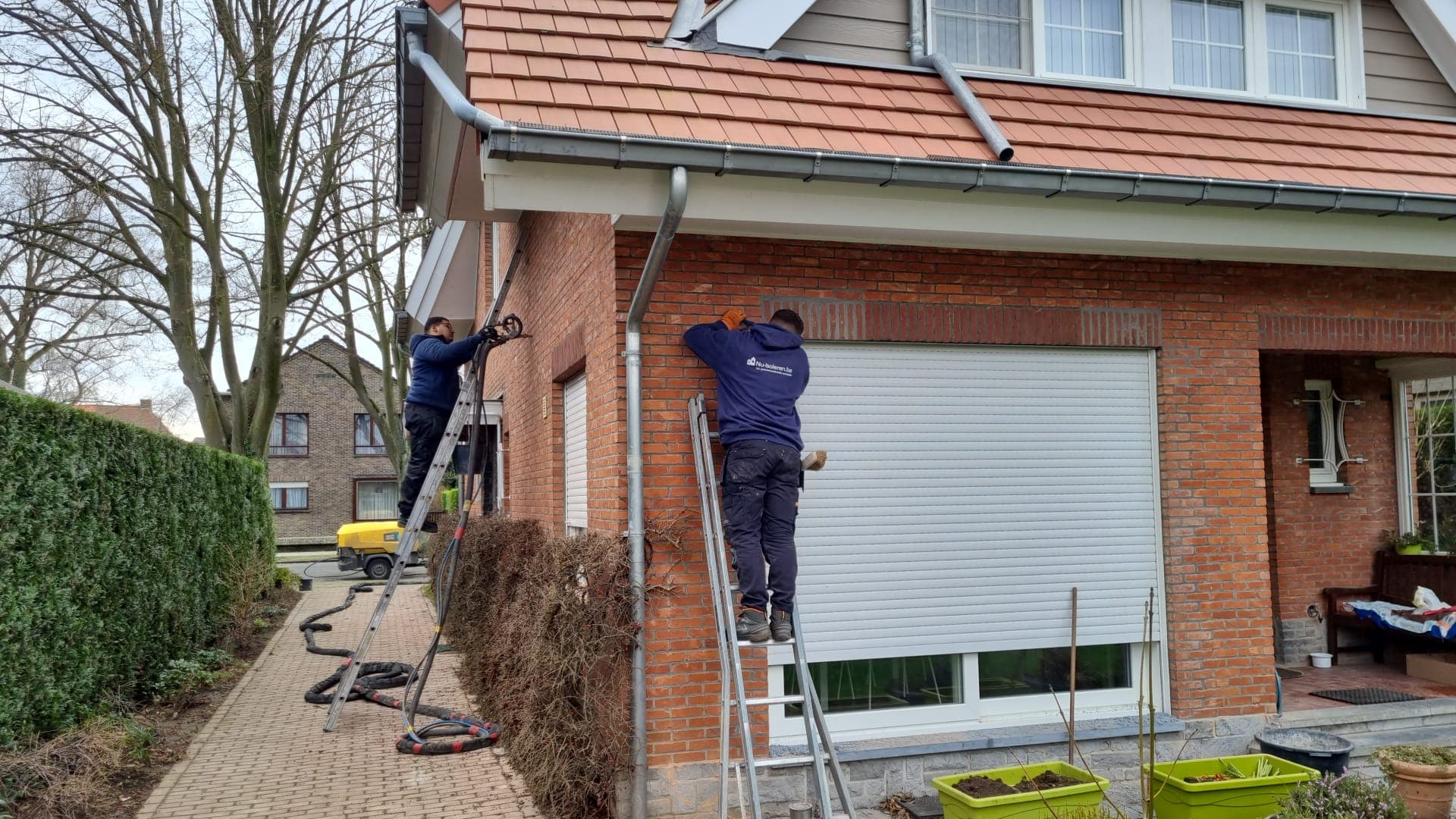
When does your home need better insulation? 5 signs you shouldn’t ignore
High energy bills, cold walls or large temperature fluctuations can point to insufficient insulation. Discover 5 signs that may indicate your home could benefit from an insulation upgrade.
Ready to improve your home?
Request a non-binding quote and discover what we can do for your home.