
Nu-Isoleren Logo
Cavity wall insulation

Which cavity wall insulation is best? Materials compared

Which cavity wall insulation is best? Compare EPS beads, mineral wool and PUR and discover why Nu-Isoleren chooses bonded EPS beads for many existing cavity walls.

Updated on 12 October 2026

Which cavity wall insulation is best? Materials compared

When considering cavity wall insulation, homeowners quickly discover that several insulation materials are available. But which cavity wall insulation is best, and which material is most suitable for an existing home?

Common materials used to retrofit cavity walls include EPS beads, mineral wool and PUR foam. Each has its own characteristics, but for many technically suitable existing cavity walls, Nu-Isoleren deliberately chooses bonded Isomo EPS beads.

In this guide, we compare the main types of cavity wall insulation and explain why EPS beads are an attractive solution for many properties.

Want to understand the process first? Learn more about our cavity wall insulation service.
Which cavity wall insulation is best?

There is no single insulation material that is automatically the best choice for every property. The solution needs to match the existing cavity wall and be installed correctly.

For many homes with a technically suitable cavity, bonded EPS beads are a particularly attractive option.

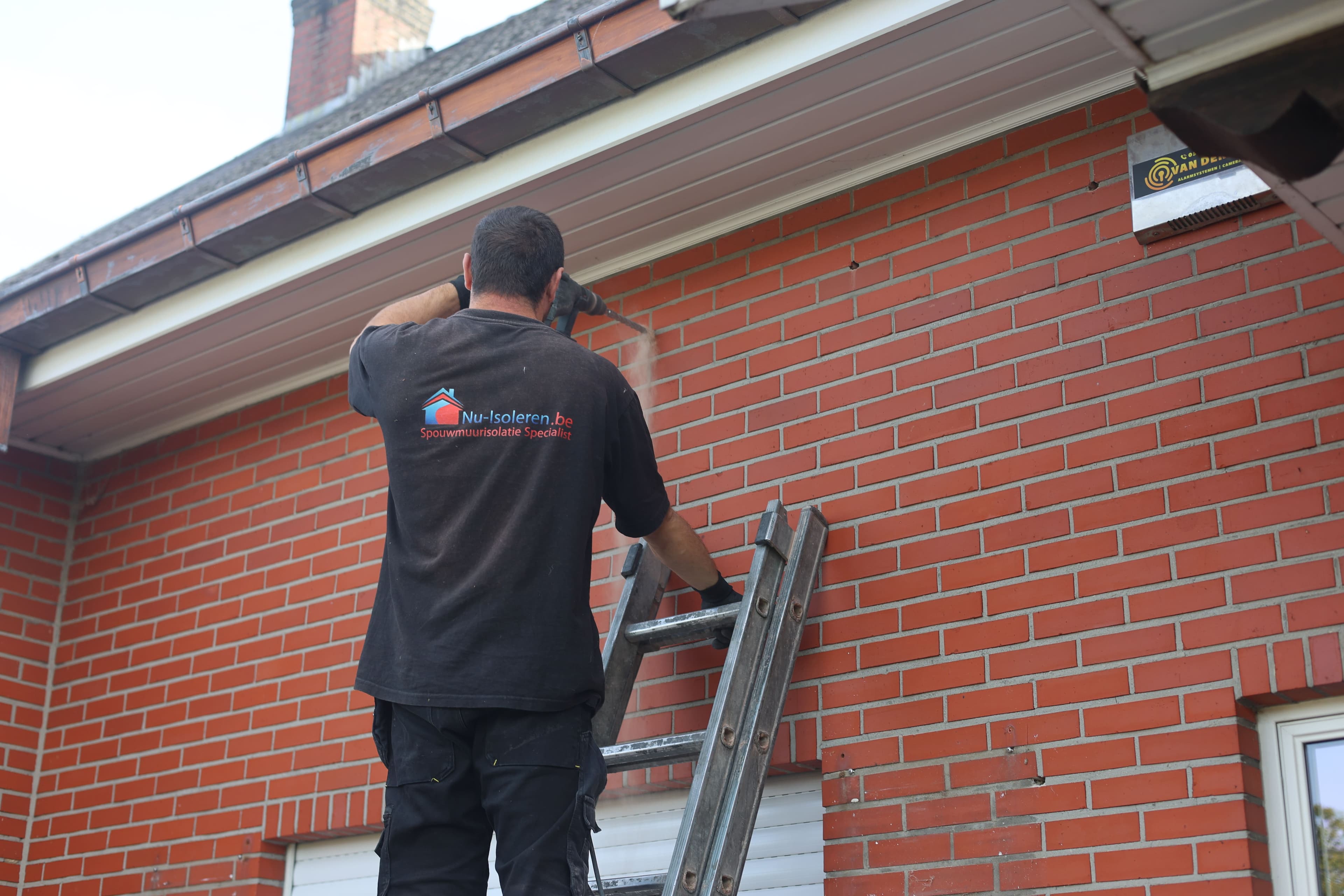
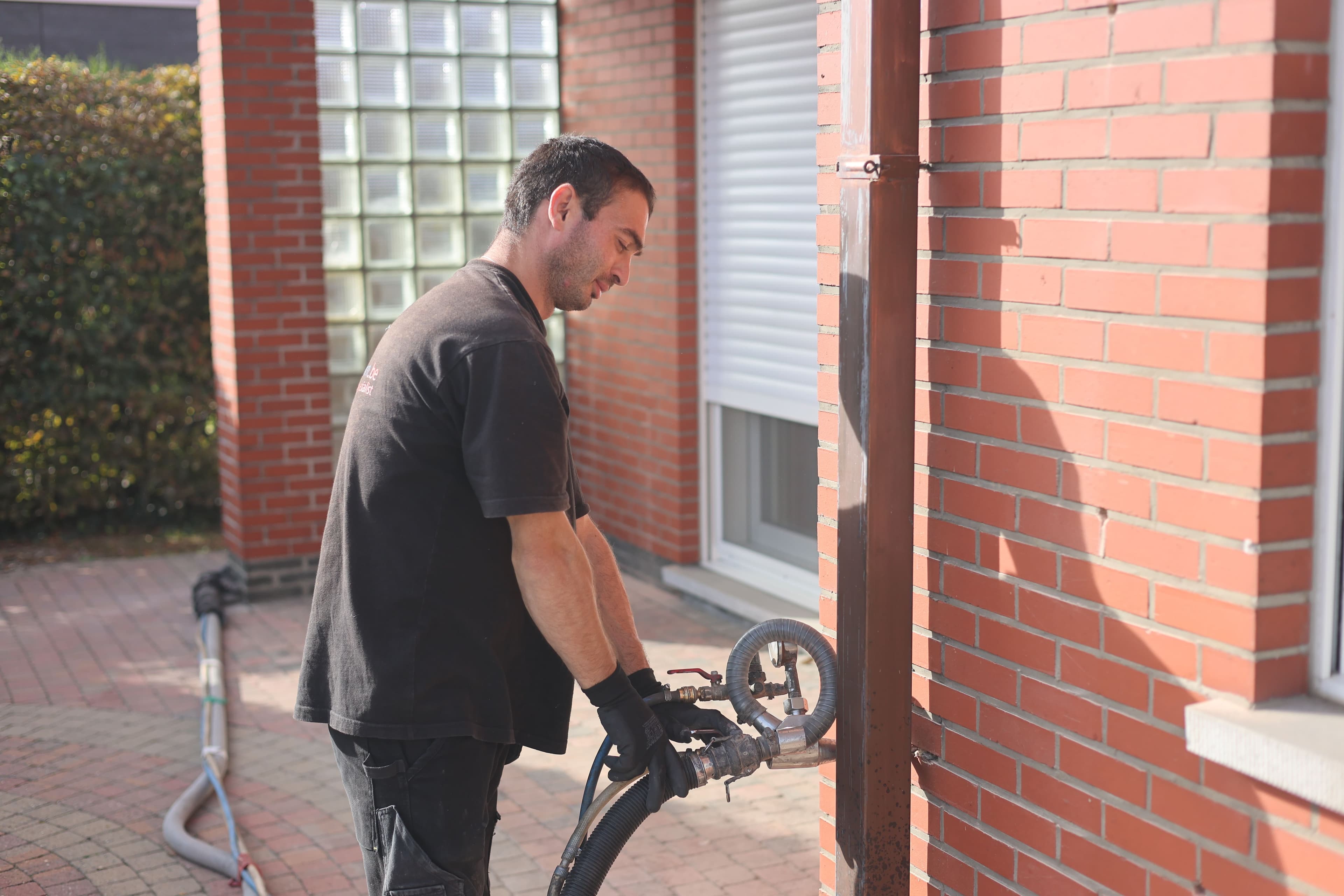
The small beads are blown into the cavity through holes drilled in the mortar joints. They spread through the available space, while a bonding agent allows them to form a stable insulation layer after installation.

Nu-Isoleren uses Isomo EPS beads, installed as part of the technically approved ATG 3170 system.

This combines a limited intervention with good thermal performance and a system specifically developed for retrofitting existing cavity walls.

What types of cavity wall insulation are available?

Several materials can be used to retrofit an existing cavity wall. Three of the best-known options are EPS beads, mineral wool and PUR foam.

EPS beads
Small expanded polystyrene beads are blown into the cavity together with a bonding agent. They spread through the available space and form a bonded insulation layer.

Mineral wool
Mineral fibres are blown into the cavity. The material provides good thermal properties and is also well known for its acoustic performance.

PUR foam
PUR is injected as a foam and expands during installation to form a continuous insulation layer.

Why are EPS beads interesting for cavity wall insulation?

EPS beads are particularly suitable for retrofitting many existing cavity walls because their small size allows them to distribute throughout the available cavity space.

Nu-Isoleren uses ISOMOPEARLS. The beads are installed together with a bonding agent and form a stable insulation layer after curing.

Important advantages include:

  • good thermal insulation;

  • good distribution throughout the cavity;

  • moisture-resistant insulation material;

  • installation through small holes in the mortar joints;

  • no major demolition work inside the home;

  • relatively quick installation;

  • preservation of the existing appearance of the façade;

  • use within a technically approved system.

The system used by Nu-Isoleren is registered as ATG 3170.

Learn more on our page about EPS insulation.

EPS beads, mineral wool or PUR: which material should you choose?

Feature

EPS beads

Mineral wool

PUR

Suitable for cavity retrofit

Yes

Yes

Yes

Installed from outside

Yes

Yes

Yes

Thermal insulation

Good

Good

Good

Distribution in cavity

Very good

Good

Very good

Moisture-resistant material

Yes

System-dependent

Yes

Acoustic performance

Good

Very good

Good

Limited intervention

Yes

Yes

Yes

Bonded system possible

Yes

n/a

Forms solid foam layer

Nu-Isoleren's choice

✓

—

—

All three materials can be used in suitable systems. The quality of the installation and the suitability of the property remain just as important as the name of the insulation material itself.

Nu-Isoleren chooses bonded EPS beads because this solution works particularly well with our installation method and with many existing Belgian homes.

Why does Nu-Isoleren choose EPS beads?

Our choice of EPS beads is deliberate. For many existing cavity walls, the system provides a strong combination of insulation performance, limited disruption and a neat installation.

The small beads can distribute effectively through the available cavity space. The bonding agent then keeps them together as a cohesive insulation layer.

We work with:

  • ISOMOPEARLS from Isomo;

  • a technically assessed system;

  • ATG 3170;

  • inspection of the cavity before installation;

  • a controlled installation method.

This allows us to look beyond the insulation material alone and focus on the complete system and correct installation.

Find out more on our cavity wall insulation page.

How much does cavity wall insulation with EPS beads cost?

The cost of cavity wall insulation is not determined by the material alone. Wall area, cavity condition, accessibility and any preparatory work also affect the final price.

At Nu-Isoleren, the indicative price for cavity wall insulation with EPS beads is €21 to €25 per m² excluding VAT.

For approximately 100 m² of cavity wall, this gives an indicative price of €2,100 to €2,500 excluding VAT.

For detailed examples, VAT information and possible financial support, read our guide to cavity wall insulation costs in 2026.

How do you know if your cavity wall is suitable for EPS beads?

You do not need to determine this yourself. Nu-Isoleren inspects the cavity before carrying out the work.

We check factors including:

  • cavity width;

  • condition of the external façade;

  • possible debris in the cavity;

  • existing insulation;

  • moisture and other points requiring attention.

This allows us to determine whether the cavity can be correctly retrofitted with EPS beads.

Insulation is therefore not simply blown into the wall without checking the property first. We assess the situation before installing the appropriate system.

What do you notice after cavity wall insulation with EPS beads?

After cavity wall insulation, your home can retain heat more effectively, improving indoor comfort while reducing the amount of energy needed for heating.

The installation itself remains relatively limited. EPS beads are blown into the cavity through small holes drilled in the mortar joints, so major demolition work inside the property is not required.

Once the cavity has been filled, the openings are carefully finished again. We do everything we can to match the original colour of the mortar joints as closely as possible, helping the work remain visually discreet.

Key benefits for homeowners include:

  • reduced heat loss through the external walls;

  • improved indoor comfort;

  • lower heating demand;

  • quick and limited installation;

  • no major interior demolition;

  • maximum preservation of the original appearance of the façade.

Want an indication of the potential savings for your home? Use our energy savings calculator.

Which cavity wall insulation should you choose for your home?

Several types of cavity wall insulation are available, but for many existing properties with a suitable cavity, bonded EPS beads are a particularly attractive solution.

That is why Nu-Isoleren uses ISOMOPEARLS within the ATG 3170 system.

This provides a solution that:

  • is specifically intended for retrofitting existing cavity walls;

  • can be installed with limited disruption;

  • provides good thermal performance;

  • uses moisture-resistant insulation material;

  • helps preserve the existing appearance of the façade.

You do not have to determine whether your cavity is technically suitable yourself. We assess the property and advise you based on its actual condition.

Want to know whether EPS beads are suitable for your cavity wall? Request a free, no-obligation quote.

MORE ADVICE

You may also find these articles useful

Discover more practical information and advice about this topic.

Ready to improve your home?

Request a non-binding quote and discover what we can do for your home.